


The Credit Union Way

Credit Unions: Some “Kind” of Wonderful
Credit unions and kindness go hand in hand. It’s one of the reasons our members love us. It’s a competitive advantage. A superpower even. It’s how we win people over and stand apart from big banks and neobanks. We have heart and soul—and we show it. That creates an emotional connection, builds trust, and inspires loyalty. And when we can't compete on rates, the number of branches, or access to free ATMs, we can still win where it matters most: how we make people feel. If we can’t win hearts and minds, we want to win hearts because an emotional connection is a commitment that is deeper, lasts longer, and isn’t always rational (in a good way) versus one where the member sees us as nice for now, but has a roving eye.
Kindness as a business strategy might seem superficial. But for a cooperative, it makes perfect sense. We don't ask, “What can we get?” We ask, “What can we give?” We go out of our way to make someone's day. We find creative ways to say yes when other institutions won't budge. We show empathy and understanding when others might pass judgment or simply say no. We look for opportunities to exceed expectations—not because we expect something in return, but because it's who we are. We appreciate, respect, and genuinely care about our people: those who work for us and those we work for—our members. And we demonstrate that kindness not just through our words, but through our actions. So, how are we doing? Think of this article as a kindness checkup for you and your credit union. As you go through the following list, check off the things your credit union already does well. Circle the things you're not doing yet but would like to. Because when it comes to kindness, there's always room to do a little more—and make an even bigger difference.
The Credit Union Kindness Checkup
PART 1. Kindness To Our Members
Make people feel seen, heard, understood, and appreciated.
__ Listen to understand, not just respond. Give members your full attention. Ask thoughtful questions, don't interrupt, and listen for opportunities to help. When someone has a complaint, get curious, not furious.
__ Be professional and personable. Be friendly, approachable, and genuinely interested in people. Have fun while getting things done. Make banking with you feel like interacting with a friend who happens to know a lot about money.
__ Lead with empathy, not judgment. When someone is struggling financially, help them feel understood rather than embarrassed. If appropriate, share a personal experience that helps them realize they're not alone, and if true, that you suffered similarly.
__ Look for ways to say yes. Instead of automatically saying no, explore creative solutions and alternatives within the rules. Sometimes kindness is simply refusing to give up on finding an answer and knowing if you can’t, you exhausted all possibilities.
__ Do the little things without being asked. Write down the phone number someone needs, even when it means sending them to a competitor. Better yet, make the call for them. Don’t just give them coin wrappers, help roll them.
__ Be reliable… and then do a little extra. Follow through on promises, meet deadlines, return calls, and keep people informed. When possible, do for one something you wish you could do for many, but can’t. Exceed someone’s expectations by doing something faster or better than expected.
__ Respect people's time and circumstances. Make things easy, convenient, and accessible. Be mindful of their schedules, limitations, and individual needs. Before asking a member to fill out a form, search for something on your website, or go through a portal, take a test drive yourself to see what the experience is like.
__ Remember names and personal details. Greet members by name, remember their interests, and follow up on important events in their lives. Make them feel like people, not account numbers. Take the time to work on developing this skill, which usually just means trying out some simple techniques to improve our memory, including writing things down.
__ Practice old-fashioned courtesy. Say please, thank you, and you're welcome. Smile. Make eye contact. Be patient, even when someone is having a bad day. Use formal titles when appropriate. Have a handkerchief handy. Have a stack of cards at the ready and handwrite your thank you notes.
__ Make someone's day with an unexpected kindness. Offer a small gift to a child, send a handwritten thank-you note, celebrate a milestone, or recognize a special occasion. Give members something worth smiling about. Make them feel like a celebrity. Give honest, sincere, and specific compliments. Create, copy, and cut up your own “You are amazing” cards to hand out.
__ Create WOW moments. Look for opportunities to do something so thoughtful and unexpected that members can't wait to tell someone about it. A housewarming gift after a mortgage closes or a personal note during a difficult time can become a lasting memory. Noting their birthday and then marking your calendar to acknowledge their half birthday.
__ Support members beyond their accounts. Patronize their businesses, recommend their services, leave a positive review when deserved, or introduce them to someone who can help.
__ Be especially kind when things go wrong. Mess up, fess up. Own mistakes, apologize sincerely, explain what happens next, and follow through. Sometimes the way you handle a problem creates more loyalty than getting everything right the first time.
__ Celebrate the wins. Recognize a member's first home, car, boat, new business, paid-off loan, graduation, or other financial milestone. Their success is your success.
__ Help people feel more confident about money. Explain financial concepts without jargon or condescension. Never make someone feel foolish for asking a question. Education is a form of kindness.
PART 2. Kindness To Our Coworkers
Create a workplace where people feel valued, supported, and appreciated.
__ Look for the good and say something. Give genuine compliments. Recognize effort, attitude, improvement, and accomplishments. Don't assume people know they're appreciated.
__ Share the credit and spotlight others. Praise publicly, recognize behind-the-scenes contributors, and make sure everyone who helped receives acknowledgment.
__ Lend a hand without waiting to be asked. Help a coworker who's overwhelmed, cover a task when possible, or offer assistance during a particularly busy day. Offer to loan them your best black dress when you know they can’t afford one for a big event. Offer to be their Lyft and drive them to the airport.
__Make new employees feel welcome. Introduce them around, invite them to lunch, answer their questions patiently, and help them feel like part of the team from day one.
__ Share what you know. Mentor a colleague, teach a shortcut, explain a process, or pass along an idea that makes someone else's job easier. Write poem, create a song, make art and share it with others as a gift.
__ Celebrate personal milestones. Remember birthdays, work anniversaries, promotions, graduations, and other meaningful occasions.
__ Be thoughtful during difficult times. Check in when someone is struggling. Offer encouragement, practical help, or simply a listening ear. Respect their privacy. Instead of sending a postcard (I know who does that anymore) to highlight your trip, make a sign that says wish you were here, and their name and send it.
__ Be generous with small gestures. Bring back a souvenir, share a treat, send an encouraging note, or surprise someone with their favorite coffee.
__ Make kindness part of the culture. Avoid gossip, give people the benefit of the doubt, welcome different perspectives, and treat everyone with respect regardless of title. Choose a day and agree that for this one day you will only focus on the positive, say positive things, and turn any negative into a… right, a positive.
__ Respect coworkers' time and boundaries. Be prepared, communicate clearly, share workloads fairly, and recognize that everyone has responsibilities outside of work.
PART 3. Kindness To The Community
Put “People Helping People” into action beyond the branch.
__ Support local businesses. Shop locally, recommend neighborhood businesses, feature member-owned companies, and look for opportunities to partner with community organizations.
Give time as well as money. Volunteer at schools, food banks, shelters, community cleanups, and nonprofit events. Show up and get involved. Create a free pantry of goods neighbors in need can access.
__ Look for unmet needs. Ask local organizations what would make the biggest difference rather than assuming you know what they need.
__ Recognize everyday heroes. Thank teachers, first responders, healthcare workers, veterans, active-duty service members, and the people who quietly make your community better.
__ Help young people get a head start. Offer financial literacy programs, scholarships, mentoring, career guidance, and opportunities for students to learn about credit unions.
Be there when disaster strikes. Support members and neighbors during fires, floods, emergencies, or unexpected hardships through appropriate relief programs, donations, and volunteer efforts.
__ Practice random acts of kindness. Pay for someone's coffee, surprise a local nonprofit with supplies, or find creative ways to brighten someone's day without expecting recognition.
__ Connect people who can help one another. Introduce local business owners, community leaders, volunteers, and organizations with shared goals. Sometimes the kindest thing you can do is make a connection.
__ Make kindness contagious. Invite members, employees, and community partners to participate in kindness challenges, volunteer days, and pay-it-forward campaigns.
__ Celebrate the people making a difference. Share stories of local kindness, highlight unsung heroes, and recognize those who give their time and talents to others.
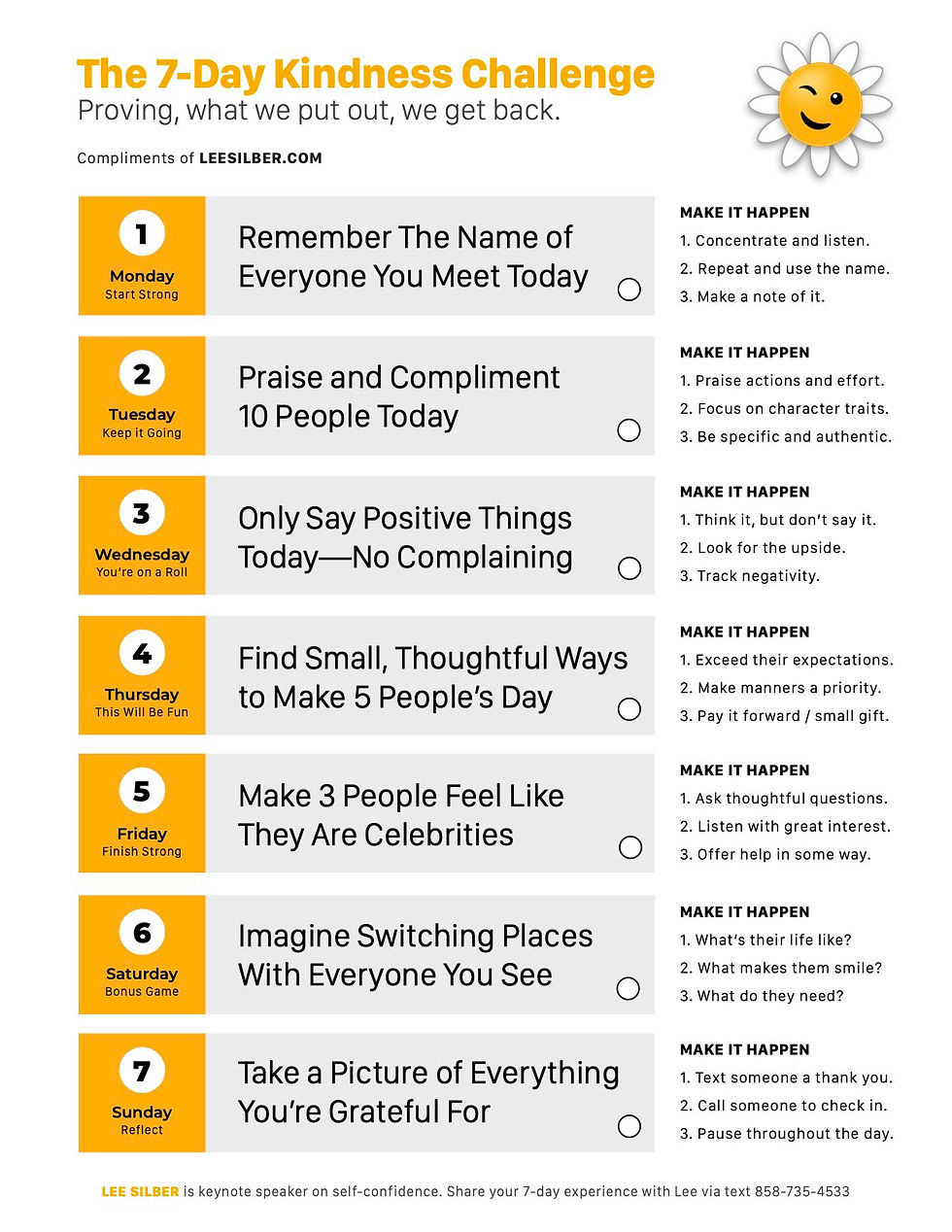
Kindness Challenge Recap
How did you do? Chances are, you're already doing many of these things. That's worth celebrating.
But the real value of this checkup isn't how many boxes you checked. It's how many new ones you're inspired to check tomorrow. Choose three things you circled. Commit to putting them into practice over the next 30 days. Encourage your coworkers to do the same. Remember, kindness doesn't have to be expensive, elaborate, or time-consuming. Sometimes it's a smile, a compliment, an extra phone call, or five minutes of undivided attention. Small acts. Big impact. And when kindness becomes something we do consistently—not occasionally or only when it's convenient—it becomes part of our culture, our reputation, and our competitive advantage.
That's the credit union way.
Lee Silber is the author of 27 books and is working on the follow up to his popular title, The Credit Union Way. If you have a story that shows your credit union exemplifying kindness and extraordinary service, send it to Silber for inclusion in, The Credit Union Way 2. Lee is also a popular presenter and trainer for credit unions and industry events. You can contact him through his website: leesilber.com



Comments